Check Your Drip Lines for Calcium Crust
If your yard utilizes a drip irrigation system and you live in the Phoenix area, you’ve probably had problems with lines clogging over time. What’s clogging the lines, and what can you do to mitigate this problem?
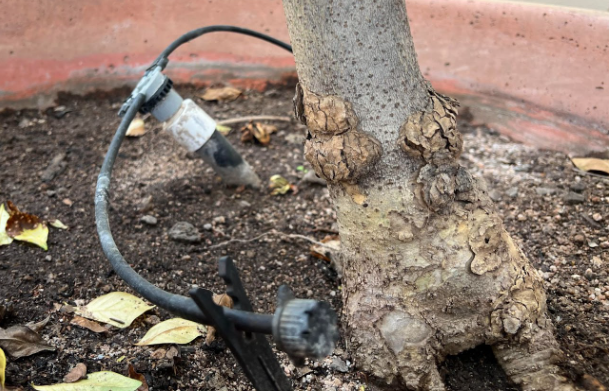
There are multiple potential causes of drip line clogging, including algae buildup and dirt getting into your pipes from leaks, bad filters, or even dirty canals depending on where you are. The most common issue faced in the Phoenix area, though, is salt buildup. Most commonly, this salt is calcium carbonate, most famously known as the active ingredient in TUMS. There’s also calcium bicarbonate and magnesium bicarbonate. All of these come together to form a whitish crust called “scale” or “limescale” on surfaces. This can form on pots and pans, in pipes, or at the emitters in drip irrigation lines.
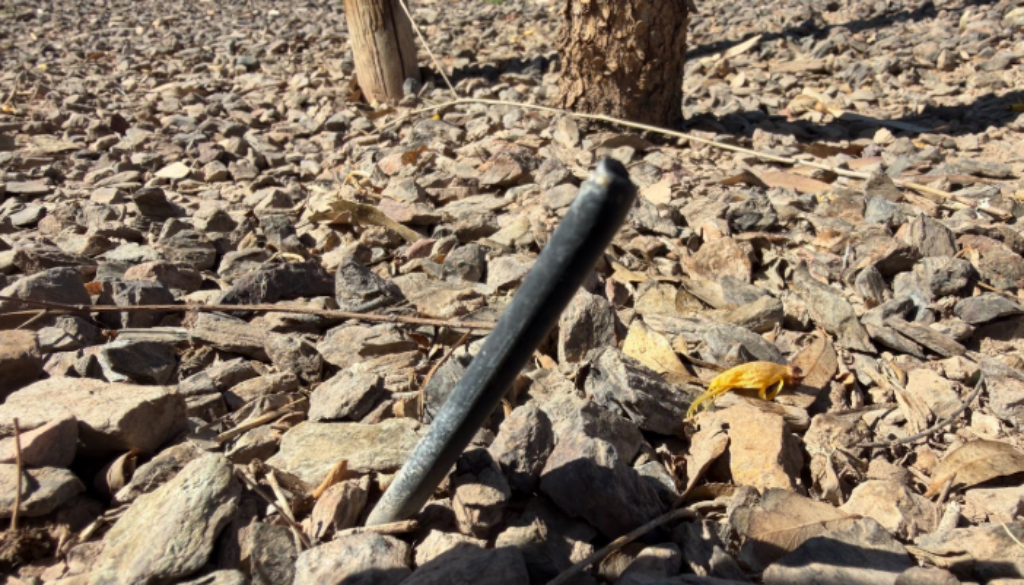
The majority of scale buildup occurs during the spring and summer, as the increasing contrast between the cold temperature of water and the warm temperature of the surface and air causes the calcifying reaction to occur quicker. This reaction can happen so quickly that the entire openings of drip emitters can be blocked off by a thick crust of calcium. You can also see evidence of this on the surface of the soil. If you see white rings of crust around your drips, then that emitter is at a higher risk of getting entirely clogged at some point during the warm season.
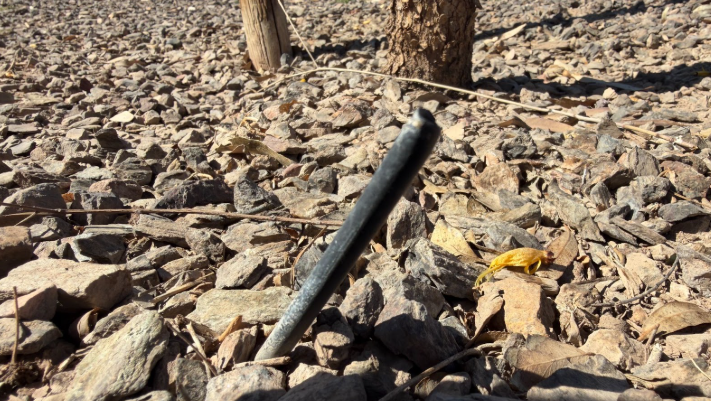
Does this mean you should just have your drip lines completely without emitters? No. Leaving driplines without emitters wastes water by leaving water pressure unregulated and allows more debris to get into your tubes, which can potentially cause much more severe clogs. The simplest reactive approach to calcium buildups is to go through your yard once or twice in the spring and summer with a toothpick or pin. Go to each emitter and break up the scale that may have formed at the opening. If even that doesn’t fix it, the emitter may need to be replaced.
If you want to make more efficient, proactive changes, you have to go to the source – the water itself. The water in Arizona, whether from canals or from wells, is very alkaline, meaning it contains lots of salts. Applying a fertigation injector system to your irrigation and adding tame acids to the water that goes to your plants. These can be purchased at stores as “pH buffers” by individuals, or they can be applied at an HOA-wide scale by landscaping companies using dilutions of sulfuric acid.
This isn’t a “one-and-done” situation, though. Arizona will always have salt problems, whether in the water we irrigate with or in the soil itself. Acid should be added to easily-crusted drip systems at least once a year, though this depends on the severity.
At ELS Maintenance & Construction, we add gentle acids to irrigation systems at a large scale in communities across the Valley to mitigate calcium buildup and improve plant health. If you know of a community or commercial center that needs new landscapers, email robbie@evergreenaz.com and we can get started!