
How To Prevent Young Flowers from “Damping Off”
Soil microbes are vital to the health and success of plants of all shapes and sizes. Some of these microbes can harm plants when something about the soil conditions creates a chemical imbalance. In particular, there are multiple fungi that are present in small amounts in Arizona soil that can quickly kill plants if they are allowed to grow out of control. The most common victims of undesired fungal imbalance are young plants recently installed in pots or planters with poor drainage. The phenomenon of young plants dying of fungal rot before they have a chance to get established is called “damping off.”

The most important thing to look out for is what was just hinted at – drainage. The roots of plants need access to air to thrive for many reasons, from water flow to gas transfer to the shedding of waste and much more. If the soil in a pot or planter has no drainage, it can become compacted and full of waste. When no oxygen reaches organic compounds, these organics create an “anaerobic” ecosystem (anaerobic = “not aerobic,” basically “no air”). It’s the collection of waste products and anaerobic conditions that make the perfect environment for a fungal take over. If the soil in a pot has an obvious “sour” smell, it’s very likely that the drainage is poor and there’s an anaerobic environment.

The best way to improve drainage in a pot is to use soil that has a lot of porous material that lets both water and air flow more freely. Horticultural pumice, vermiculite, and perlite are all great porous substances to mix into potting soil to improve flow. Even a thin layer of sand can help significantly. Avoid using packing peanuts or other artificial substances, as they can degrade and clog drainage or release chemicals that harm roots.
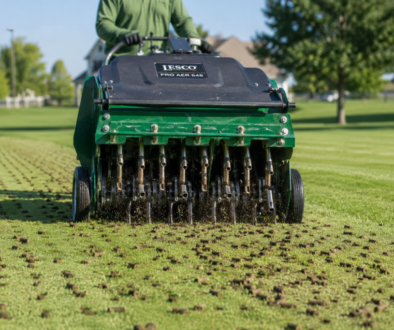
Even potting soil that typically has good drainage can become compacted by heavy rains and flooding. After heavy rains, if your potting soil feels hardened and compacted, it can be helpful to manually break up the soil to allow air back in. Worms are also a great natural source of soil aeration.
Newly-installed flowers and fresh seedlings are most often killed by fungus in anaerobic situations, but how can you tell if fungus in a pot is helpful, like mycorrhizae, or harmful, like Texas Root Rot? If leaf debris on the surface has some mold growing through it, this is generally not a problem. If there is obvious mold growing around the stalks or sprouts of plants, then there is a cause for concern. Emergency fungal solutions include applications of copper fungicide, diluted hydrogen peroxide, or even cinnamon.
At ELS Maintenance & Construction, we do our best to improve and maintain the quality of soil so plants of all sizes can truly thrive. If you know of a community or commercial center that needs new landscapers, email contactus@evergreenaz.com and we can get started!