What Mushrooms Mean For Your Arizona Turf
There are countless species of fungus in the Sonoran Desert which can be found in different volumes at different times of year. Some are large and easy to spot; others are microscopic. Most are either neutral or beneficial to plant health, and some can kill vulnerable plants. Some fungus, such as Valley Fever, can even cause disease in humans. It’s important to emphasize that only a small minority of fungus species are harmful to plants, and most of the ones that look like stereotypical mushrooms are probably not hurting your plants.
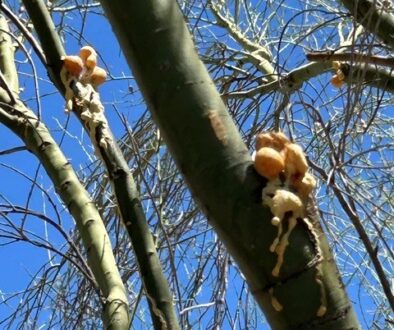
Fungi feed off of dead or dying organic material, whether plant, animal, or bacteria-based. Many form the Sonoran Desert’s ever-rarer mycorrhizal network, turning waste into fertilizer and connecting the root systems of plants together, helping them greatly. Some particularly aggressive fungi are pathogenic and can infect and kill plants, consuming them while they are still alive. Examples of these include Verticillium, Phytophthora, Texas Root Rot, Sooty Canker, Pythium and more, and these cause problematic plant diseases that landscapers deal with all the time in the Phoenix area. There are also conks and “shelf mushrooms” which affect rotting trees mostly in the forests of Arizona, but rarely in the desert. None of these, however, show themselves as the classic “mushrooms” we imagine when we think of fungus.
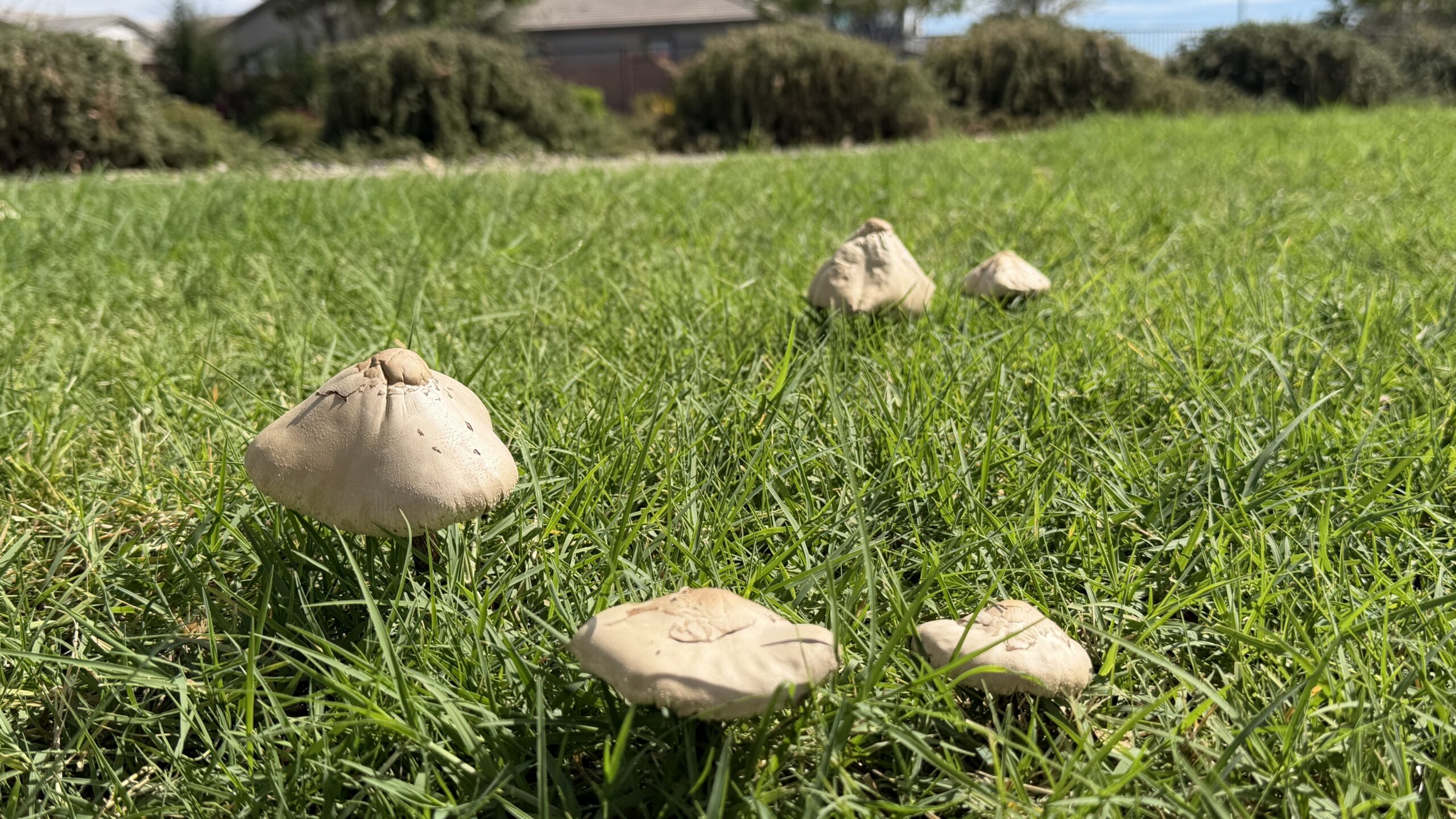
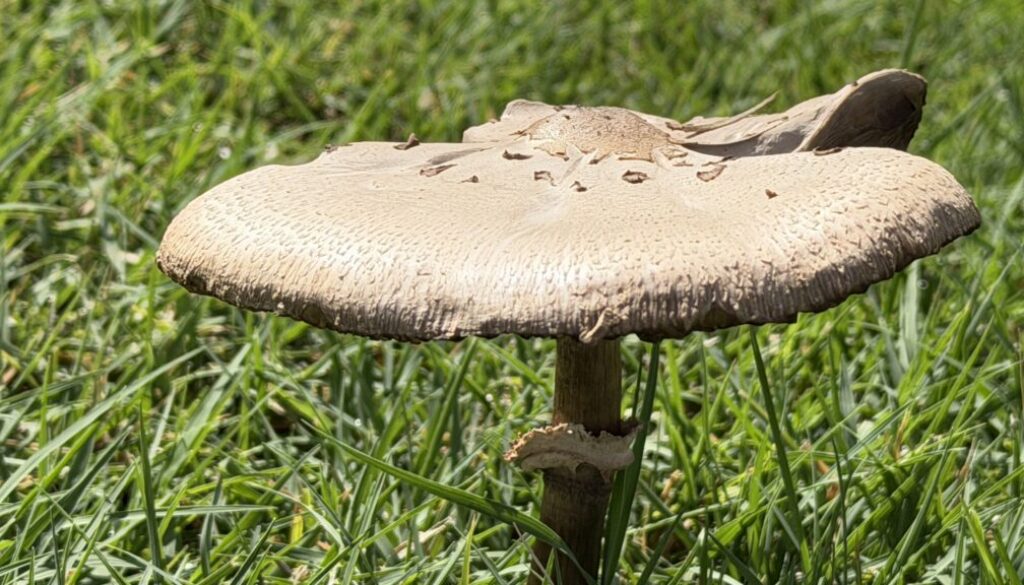
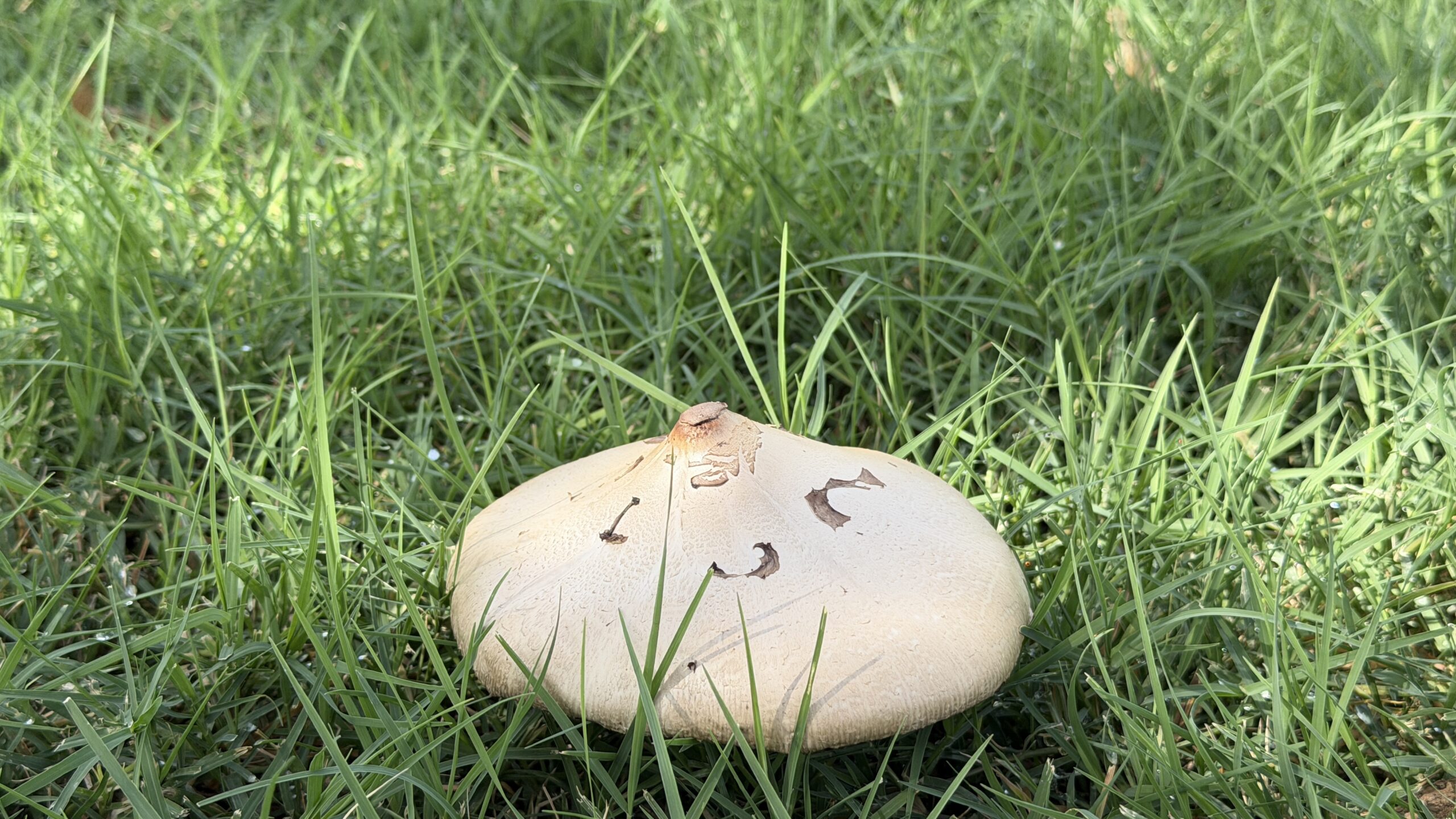
In landscaping, the most frequent mushrooms we see are found in turf. The most common include Green-Spored Parasol (Chlorophyllum molybdites), Meadow Mushroom (Agaricus campestris), Fieldcaps (Agrocybe spp.), Mower’s Mushroom (Panaeolina foenisecii), and Stalked Puffballs (Podaxis inyoensis). Most are white-to-brown in coloration with significant variety in their shapes. Most people see any quantity of mushrooms in turf grass and assume it means that there is some sort of disease that’s surely killing the grass. This is actually (generally) not the case, as, when distributed relatively randomly throughout a turf area, the mushrooms mentioned above are either neutral or beneficial to the health of the turf! At the very least, they are not something to innately be afraid of, unless your dog or young child has a tendency to eat random things from the ground. Do not eat the mushrooms you find in turf.
As grass grows, its older blades die, either through mowing or aging. These pieces of dead matter gradually accrue into “thatch,” which can often become a thick layer of dead materials. This layer can eventually become clogged, and anaerobic (lacking in oxygen), making it a perfect place for decomposers such as worms and fungus to grow. When landscapers “dethatch,” they use a variety of tools or machines to remove the layer of dead materials from the grass. This process is not perfect, however, and often some areas are left with more thatch than others, and it is these areas where mushrooms are most likely to form. When mushrooms grow without any obvious visual pattern, they are simply eating this decaying material, converting it into natural fertilizer and opening thatch up to air flow, benefiting the grass.
Sometimes, mushrooms will pop out of spaces that look barren. This usually happens when the mushrooms find dead roots under the surface that are in anaerobic conditions, waiting to be broken down. In this case, the mushrooms are a sign that the soil is clogged with buildup from salt, calcium, and other minerals that can be treated with gypsum or other soil acidifiers, or that the soil is over-compacted by human or vehicle activity and needs to be aerated.
The most common situation that foretells something bad happening in the soil is when mushrooms form patterns, such as obvious lines, ridges, or circles known as “fairy rings.” This could be a sign of drainage issues, water settling, inadequate dethatching, or other issues that can point to declining turf health. Conveniently, when these patterns form, they give landscapers an obvious visual hint of exactly where they need to focus on to maximize turf performance going forward.
At ELS Maintenance & Construction, we work on turf throughout the Valley year-round and have seen and solved nearly every grass health issue in the book over almost 50 years of service. If you know of a community or commercial center that needs new landscapers, email robbie@evergreenaz.com and we can get started!